
The demand for remote developers has skyrocketed in today's rapidly evolving business landscape. Hiring talent from anywhere worldwide offers numerous advantages, including access to a wider pool of skilled professionals, cost savings, and increased flexibility. However, hiring remote developers requires a strategic approach to ensure successful outcomes. In this comprehensive guide, we will explore on how to hire remote developers and provide a step-by-step hiring process through Uplers– a renowned remote hiring platform.
Benefits of Hiring Remote Developers
Here are the benefits of hiring remote developers-

Access to a Global Talent Pool
Hiring remote developers lets you break free from geographical limitations and connect with top talent worldwide. This expands your possibilities for finding specialized skills and diverse perspectives.
Cost-Effectiveness
Remote developers can often be more cost-effective than hiring locally. You can eliminate expenses associated with office space, equipment, and benefits and tap into regions with lower labor costs.
Increased Flexibility
Remote developers provide the flexibility to scale your team up or down as needed without the constraints of physical office space. This agility enables you to adapt quickly to changing business needs.
Improved Productivity
Remote developers are known for their ability to work independently and efficiently. They are often highly motivated and adept at managing their time, increasing your organization's productivity.
How to Hire Remote Developers with Uplers: Step-by-Step Hiring Guide 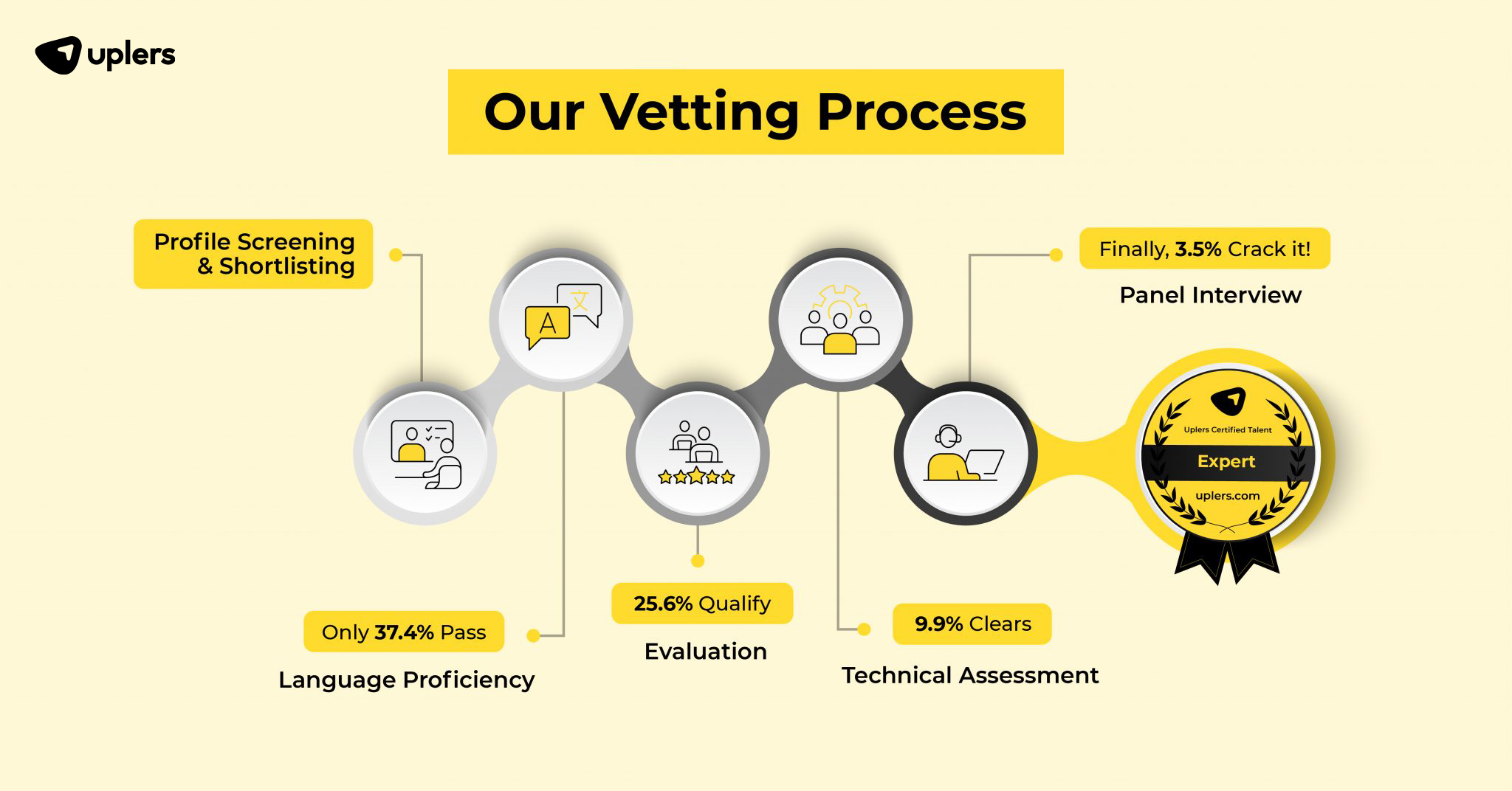
Uplers is a matchmaking platform that helps global companies hiring remote developers from India employ 10X faster & more efficiently. A network of 200,000+ talents, pre-vetted against their technical capabilities, language proficiency, and behavioral skills.
Step 1: Share the Job Description
Begin by creating a detailed job description outlining the required skills, experience, and expectations for the remote developer position. Be specific about the technical requirements and any additional qualifications necessary. Utilize Uplers' user-friendly platform to post job descriptions and attract potential candidates.
Step 2: Source Candidates
Simplifies the candidate sourcing process by leveraging its vast network of highly skilled remote developers. The platform employs rigorous screening methods, ensuring that only qualified candidates are presented to you. By utilizing their expertise, you can save valuable time and focus on evaluating the most suitable candidates for your organization.
Step 3: Interview & Hire
Once you have a shortlist of candidates, it's time to conduct interviews. Uplers provides a seamless video interviewing feature, enabling you to connect with candidates remotely and assess their technical skills, communication abilities, and cultural fit. Select the candidate who best aligns with your requirements and extend an offer.
Step 4: Onboard & Manage
After hiring a remote developer, a smooth onboarding process is crucial for their successful integration into your organization. Uplers offers comprehensive onboarding support, ensuring the developer can access the necessary tools, resources, and documentation. Additionally, the platform facilitates effective communication and project management, enabling seamless collaboration between remote developers and your in-house teams.
Conclusion
Hiring remote developers can be a game-changer for organizations seeking top talent, cost savings, and enhanced flexibility. Companies should hire remote software developers through Uplers to streamline their remote hiring process and secure the ideal candidates for their team. Embrace the benefits of remote development and position your organization for success in today's digital era. Hope this resolves your question on how to hire remote developers.
Comments
Post a Comment